White-Hat Link Building in 2026: How to Rank on Google & AI Search
Two weeks ago, an e-commerce founder from London jumped on a quick call with me.
He looked exhausted.
Over the past eight months, he had spent nearly $6,500 buying “monthly SEO packages” from three different vendors. On paper, he had gained over 400 new backlinks. His spreadsheets looked great. Every row had a high Domain Authority number next to it.
Yet his organic traffic had dropped by 38 percent since March.
Even worse, when he typed his main product category into ChatGPT, Perplexity, and Google’s AI Overviews, three of his smaller competitors showed up right at the top. His brand wasn’t mentioned once.
“Shahzad,” he asked me, “is link building dead, or am I just doing it completely wrong?”
I hear some version of this question almost every week at shahzadmarketer.com. And after publishing more than 10,000 guest posts and building over 25,000 backlinks for 500+ clients worldwide, I can give you the honest answer in one sentence.
Link building is not dead—but lazy link building is completely finished.
If you are still building links the way people did three or four years ago, you aren’t just wasting your budget. You are actively training Google and AI search engines to ignore your website.
In this guide, I am going to walk you through what actually works right now. No theory copied from other blogs. Just the exact white-hat strategies I use every day to help brands climb Google rankings and earn real citations inside AI answers.
Why Old-School Link Building Stopped Working

Let’s be honest about how most people used to buy links.
For years, the playbook was simple. You opened a huge spreadsheet of websites, filtered by Domain Authority (DA) or Domain Rating (DR), picked the cheapest ones, and stuffed your exact target keyword into a 500-word article.
Sometimes it worked. For a few months, at least.
Today, that approach falls apart fast. Search engines don’t just count links anymore. They read context. They track whether real human beings actually visit the website linking to you. They check whether that website writes about one clear industry or publishes random articles about crypto, dog food, casinos, and plumbing all on the same day.
When I audited that London founder’s backlink profile, the problem jumped off the screen in five minutes.
Out of his 400 links, almost 370 came from “general news” blogs that had zero real readers. The articles were written by cheap AI tools without a single human edit. And nearly half of those links used the exact same commercial keyword as the anchor text.
He hadn’t built authority. He had built a giant footprint.
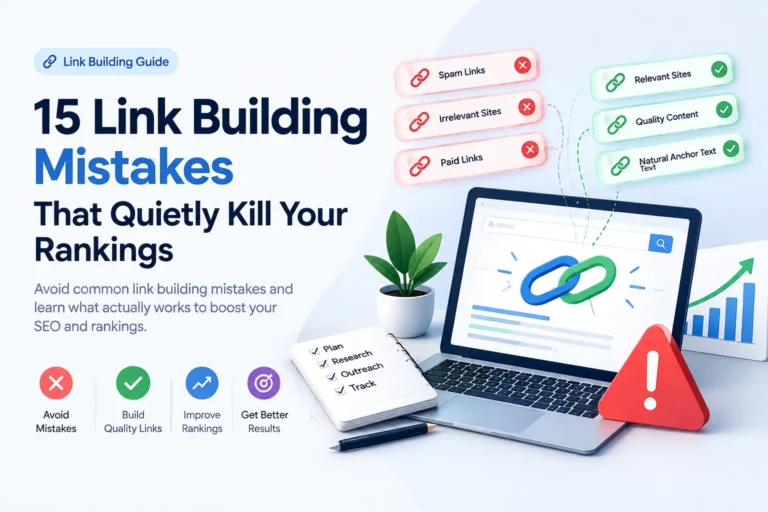
If you want to see whether your own site is falling into the same trap, I broke down these exact patterns in my guide on 15 link building mistakes that quietly kill your rankings.
If you want to understand what triggers spam filters, you can review Google’s official link spam guidelines to see how search engines view manipulative link practices.
The New Reality: Ranking on Google AND AI Search Together
Something big shifted over the last two years.
People still search on Google billions of times a day. Traditional blue links still drive massive revenue. But buyers now do something else before they pull out their credit card.
They ask AI.
A SaaS buyer asks ChatGPT: “What is the best project management tool for remote engineering teams?”
A startup founder asks Perplexity: “Which SEO agencies actually offer white-hat guest posting without PBNs?”
A shopper reads Google’s AI Overview right at the top of the search results before scrolling down.
Here is what most marketers don’t realize yet: Google rankings and AI citations feed off the exact same trust signals.
Large language models and AI search engines don’t invent trust out of thin air. They pull answers from the open web. According to industry backlink research studies by Ahrefs, pages with contextual backlinks from trusted domains consistently capture more organic visibility:
- Which brands get mentioned on respected, high-traffic publications.
- What words sit directly around your brand name when other websites talk about you.
- Whether niche-relevant blogs link to your guides as a trusted source.
- Whether your website’s technical structure makes it easy for machines to verify who you are and what you do.
When you earn an editorial placement on a real publication with real readers, you aren’t just getting a backlink for Google’s crawler. You are putting your brand into the exact training data and live search index that AI engines read every single day.
One good placement now does two jobs at once.
What a High-Value Backlink Actually Looks Like Today
People love making SEO sound complicated. It really isn’t.
When my team evaluates a website for our white-hat link building and guest posting services, we don’t care about vanity screenshots. We look at five practical signals.
1. Real Organic Traffic From Real Markets
Domain Authority can be faked in two weeks using redirect tricks. Real organic traffic cannot.
Before you ever place an article on a website, look at its traffic trend. Does it rank for real keywords in the US, UK, Europe, or APAC? Is the traffic stable or growing? A DA 45 website with 15,000 real monthly readers in your industry will beat a manipulated DA 75 “link farm” with zero traffic every single day of the week.
2. Topical Relevance That Makes Sense to a Human
Ask yourself a simple question: If Google didn’t exist, would it still make sense for my brand to appear on this website?
If you run a B2B software company, getting a link from a dedicated tech, startup, or business publication makes complete sense. Getting a link from a mummy recipe blog does not. As I explained in my breakdown of link building for SaaS companies, relevance is the multiplier that makes fewer links work ten times harder.
3. Editorial Standards (Sites That Say “No”)
Here is a secret from someone who talks to editors every day: the best websites to get a link from are the ones where the editor rejects bad drafts.
If a site publishes anything within ten minutes without checking the grammar, facts, or links, stay away from it. Everyone else is buying links there too. Real editorial websites protect their readers. When you get published on a site with real editors, that link holds its value for years—not weeks.
4. Natural Surrounding Context
Search engines don’t just read the blue clickable words of your link. They read the entire paragraph around it.
If your link is dropped awkwardly at the end of a generic paragraph that has nothing to do with your business, it carries very little weight. And AI search engines won’t associate your brand with the topic at all.
The sentence before your link should set up a real problem or question. The sentence containing your link should point to your page (or your brand) as the helpful answer.
5. Honest Anchor Text Variety
Nothing screams “paid link scheme” louder than 50 backlinks that all use the exact same commercial keyword.
Real people don’t link like that. Some writers link using your brand name. Some paste your raw URL. Some link a long, natural phrase inside a sentence. Only occasionally does someone link your exact target keyword.
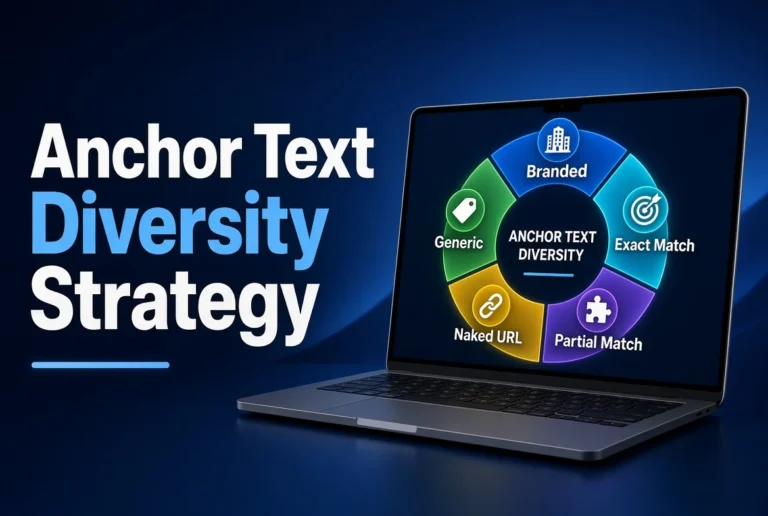
If you haven’t audited your anchor percentages lately, read our full anchor text diversity strategy guide before you launch your next campaign. Fixing your anchor mix is often the fastest way to unstick a site that has plateaued on page two.
Guest Posting vs. Digital PR & Press Releases: Why You Need Both
A question I get almost every week from agency owners and startup founders is: “Should I put my budget into niche guest posts, or should I run press releases on big media sites?”
Here is the truth. Treating them as enemies is a mistake. They do two completely different jobs for your search visibility—and when you combine them, the results compound.
Let’s look at how each one works in practice:
| Feature | Strategic Guest Posting | Digital PR & Press Releases |
| Primary SEO Goal | Build topical authority and rank specific money pages or guides | Build brand trust, entity recognition, and high-authority media citations |
| Typical Link Attribute | Mostly DoFollow contextual links | Mix of NoFollow, DoFollow, and unlinked brand mentions |
| Best For Google Search | Passing direct link equity to inner pages and target keywords | Showing Google your brand is a legitimate, newsworthy business |
| Best For AI Search (GEO) | Teaching AI how your product solves specific niche problems | Getting your brand name cited on top-tier news domains AI trusts most |
| Ideal Frequency | Consistent monthly cadence (drip-fed) | Around launches, funding rounds, research reports, or major milestones |
Think of it like building a house.
Press releases and top-tier media placements pour the concrete foundation. When your company is mentioned on major news outlets—places like Yahoo Finance, Business Insider, AP News, or VentureBeat—both Google and AI models recognize your company as a real entity.
Many people panic because major news outlets often use nofollow links. Don’t make that mistake. As I shared in The Truth About Dofollow vs Nofollow Links, some of the biggest ranking jumps I have ever seen came right after a brand earned a handful of high-visibility nofollow placements on household-name publications. Why? Because it makes your entire backlink profile look natural and trustworthy.
Once that trust foundation is in place, strategic guest posting builds the walls and the roof.
Through niche-relevant guest posts on DA 40 to DA 90+ websites, you can point clean, contextual dofollow links directly to your core service pages, product comparisons, and in-depth blog guides.
And if you are preparing a major company announcement—like a seed round, a new product launch, or an expansion—make sure you structure the story properly. You can steal the exact framework I use with founders in my guide on writing a press release for a startup funding announcement.
You can steal the exact framework I use with founders in my guide on writing a press release for a startup funding announcement. To learn more about how brand mentions influence authority, you can read expert insights on Search Engine Journal’s SEO and authority guides.
My 6-Step White-Hat System to Rank on Google and Get Cited by AI
If a client hired me today with a clean slate and said, “Shahzad, build us a search presence that dominates Google and shows up in AI recommendations over the next six months,” I wouldn’t start by buying random links.
I would follow this exact six-step sequence.
Step 1: Audit Your Current Profile Before Adding Anything New
You wouldn’t paint over a rusty car without cleaning the metal first. Link building is the same.
Before placing a single new guest post, pull your existing backlink data. Look at your referring domains, check which pages on your site actually have links pointing to them, and look for any broken links (404 pages) that are wasting authority you already earned.
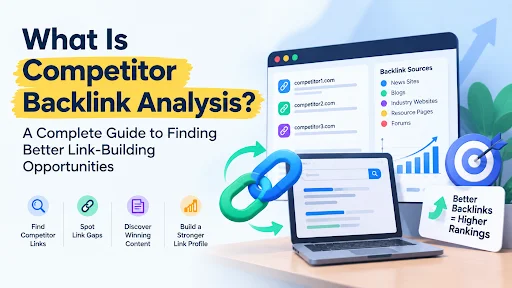
If you have never done a clean audit before, follow our step-by-step tutorial on how to check backlinks of a website. It takes less than thirty minutes using free tools like Google Search Console alongside Ahrefs or Semrush, and it shows you exactly where your gaps are.
Step 2: Create “Link-Worthy” Assets That Deserve to Be Cited
Here is a hard truth that saves my clients thousands of dollars: it is ten times harder (and more expensive) to rank a thin, boring sales page than a page that actually helps people.
Also, AI search engines rarely cite generic “Hire Us” service pages when answering informational prompts. They cite pages that contain:
- Specific numbers, pricing breakdowns, or original data.
- Clear step-by-step frameworks or checklists.
- Free interactive calculators, estimators, or generators.
Look at what we did on our own website. Instead of just writing about pricing, we built an interactive Guest Post & Press Release Pricing Estimator so agency owners can calculate campaign costs in seconds without signing up. And instead of just telling people to use structured data, we built a free Schema Markup Generator.
Pages like that give editors a genuine reason to link to you—and they give real visitors a reason to stay on your site.
Step 3: Reverse-Engineer What Is Working for Your Top 3 Competitors
Stop guessing how many backlinks you need. Your competitors have already spent the money to test what Google rewards in your niche.
Pick the three websites ranking right above you for your most profitable keywords. Look at their backlink profiles, not just for total link count, but for patterns:
- Are they getting links to their homepage or to specific comparison guides?
- Which industry publications have mentioned two or more of your competitors, but haven’t mentioned you yet?
- What pace are they earning links at—five a month, fifteen a month, or forty a month?
When you know the exact gap between your domain and theirs, you can map out a realistic budget instead of shooting in the dark.
Step 4: Lock In Niche-Relevant Editorial Guest Posts (With Real Readers)
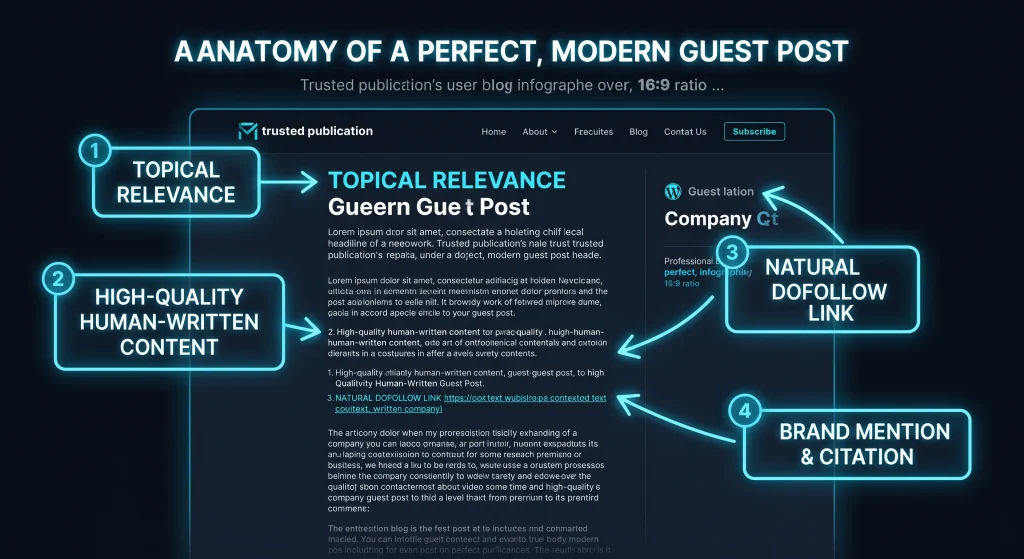
Now it’s time to build consistent authority.
Instead of blasting 50 low-quality blogs in one week, aim for a steady, natural drip of high-quality guest posts on real websites in your industry.
When my team handles guest posting campaigns—you can learn more about my background and editorial network on my About page—we obsess over the article itself. We don’t submit fluff. We write 1,000+ word articles tailored to that publication’s actual audience.
Here is a pro tip for AI visibility inside your guest posts: include your brand name near your link.
Don’t just hide your link behind a generic phrase like “click here” every time. When natural, let the sentence mention your brand name, what you specialize in, and a concrete proof point. When AI crawlers read that article on a trusted third-party site, they connect your brand name directly to your core service.
Step 5: Layer Digital PR & Brand Mentions Around Milestones
Every two or three months, give the media something real to talk about.
You don’t need to raise $10 million in venture capital to run a great digital PR campaign. You can publish a small industry survey, release a free tool, announce a major client milestone, or share counter-intuitive data from your own customer base.
Distribute that story across respected media outlets. This floods your brand entity with fresh, authoritative mentions, brings in natural branded searches, and keeps your link velocity looking 100% organic to Google’s spam filters.
Step 6: Connect the Dots With Smart Internal Linking and Schema Markup
This is the step where 80 percent of websites leave free rankings on the table.
Suppose you earn five strong backlinks from DA 60+ tech publications pointing to an in-depth guide on your blog. That blog post now has real authority flowing into it.
What happens next?
If that blog post is a dead end with no internal links, the authority sits there. Carry that authority across your site! Add natural contextual internal links from your strongest blog articles to your core service pages, tools, and related guides—just like we do across the Shahzad Marketer blog.
At the same time, make sure search engines and AI bots can read your pages without guessing. Adding clean JSON-LD structured data (Organization, Article, FAQPage, and Service schema) tells Google and AI crawlers exactly who wrote the content, what your company offers, and how your pages connect. You can generate valid JSON-LD code in under two minutes using our free Schema Markup Generator tool.
You can generate valid JSON-LD code in under two minutes using our free Schema Markup Generator tool. You can explore the complete technical guidelines directly on the Google Search Central Structured Data documentation.
A 60-Second Checklist Before You Pay for Any Backlink
Whether you build links in-house or work with a partner, keep this checklist next to your desk. Before approving any website for a guest post or link placement, ask these seven questions:
- Would a real person read this website voluntarily? Open the homepage. Look at the last five articles published. If every headline reads like an obvious advertisement for casinos, CBD, and random local plumbers, close the tab immediately.
- Does the website get real organic search traffic? Check Ahrefs or Semrush. Even 1,000 to 5,000 real monthly visitors from targeted countries is far better than a fake traffic spike from irrelevant keywords.
- Is the topic closely tied to my business or audience? A smaller site in your exact niche is almost always more valuable than a giant site that has nothing to do with what you sell.
- Will the article be indexed in Google? A backlink on a page that Google refuses to index passes zero SEO value and cannot be read by most AI search crawlers.
- Does my anchor text fit the sentence naturally? Read the sentence out loud. If it sounds awkward or robotic, rewrite it.
- Is there a real human editor reviewing the piece? Direct editor relationships are what keep placements live for years instead of disappearing after three months.
- Am I getting transparent reporting? You should always see the exact live URL, the publication metrics, and the content you paid for—with zero hidden PBNs.
Why Human Content + Real Relationships Always Win Long-Term
Every time Google rolls out a Core Update or a Spam Update, my WhatsApp lights up.
Two types of people message me.
The first group is in full panic mode. Their traffic just fell off a cliff overnight because they tried to outsmart the algorithm with cheap link farms, automated outreach spam, and unedited AI content.
The second group sends me screenshots of their rankings climbing to the top three—because every time Google cleans up spam from the search results, the brands that invested in real, white-hat authority move up to take their spot.
I started shahzadmarketer.com because I was tired of seeing smart business owners and agencies get burned by shady link vendors.
Real SEO isn’t magic. And it isn’t about gaming a machine.
It is about publishing genuinely helpful content written for human beings, backing it up with clean technical SEO, and earning placements on real publications through direct relationships with editors. When you do those three things consistently, you don’t have to fear the next Google update—or worry about whether AI search engines will remember your brand.
Frequently Asked Questions (FAQs)
Do backlinks still matter for SEO and AI search in 2026?
Yes—more than ever, provided they come from real, trusted websites. While thin, spammy links are ignored or penalized, editorial backlinks and brand mentions on authoritative publications remain one of the strongest signals both Google and AI search engines use to verify which brands deserve to be recommended.
How many backlinks do I need per month to see ranking improvements?
There is no single magic number. A local business or niche SaaS startup might see major ranking jumps from just 4 to 8 high-authority, niche-relevant guest posts per month, while a competitive global finance or e-commerce brand may need a larger ongoing campaign. Consistency and quality always beat sudden spikes in volume.
How do I get my brand mentioned in ChatGPT, Perplexity, and Google AI Overviews?
AI models cite brands that show strong authority across the web. Focus on three things: publish clear, fact-rich guides on your own site, earn contextual guest posts and digital PR mentions on high-authority third-party publications in your niche, and use clean Schema markup so crawlers can easily connect your brand name to your core services.
Is guest posting still safe according to Google guidelines?
Guest posting on real websites where you contribute genuinely useful, original content for their readers is a time-tested white-hat strategy. It only becomes risky when you pay for mass placements on low-quality link farms with no editorial standards and stuff exact-match keywords into every paragraph.
How much should I budget for white-hat guest posting or press releases?
Pricing depends on the publication’s Domain Authority, real traffic volume, and editorial requirements. Instead of guessing, you can use our free Guest Post & Press Release Pricing Estimator to check realistic cost ranges across DA 30 to DA 90+ publications in seconds.
Final Thoughts (And How to Get Started)
You don’t need 10,000 cheap backlinks to dominate your niche this year.
You need a handful of placements that your competitors can’t easily copy—published on real websites, read by real people, and built with a natural anchor strategy that holds up through every algorithm shift.
Start by auditing what you already have. Fix your internal linking. Build pages worth citing. And when you’re ready to scale your authority with white-hat guest posting, digital PR, or a complete SEO roadmap, check out our full range of SEO and link-building services or reach out to me directly at shahzadmarketer.com.
Get in Touch
Questions about guest posting, press releases, or getting your brand featured on premium publications? Shahzad is available directly through the channels below:
Email: shahzad@shahzadmarketer.com
LinkedIn: https://www.linkedin.com/in/shahzadmarketer/
WhatsApp: +44 7848 475000
Website: https://shahzadmarketer.com